THE PEOPLE BEHIND THE PERFORMANCE
In the America's Cup, performance is built on more than the speed of the boat. It comes down to the people and the decisions made on board, the information gathered on the water and the communication that connects the sailing team with the people off the boat helping them perform at their best.
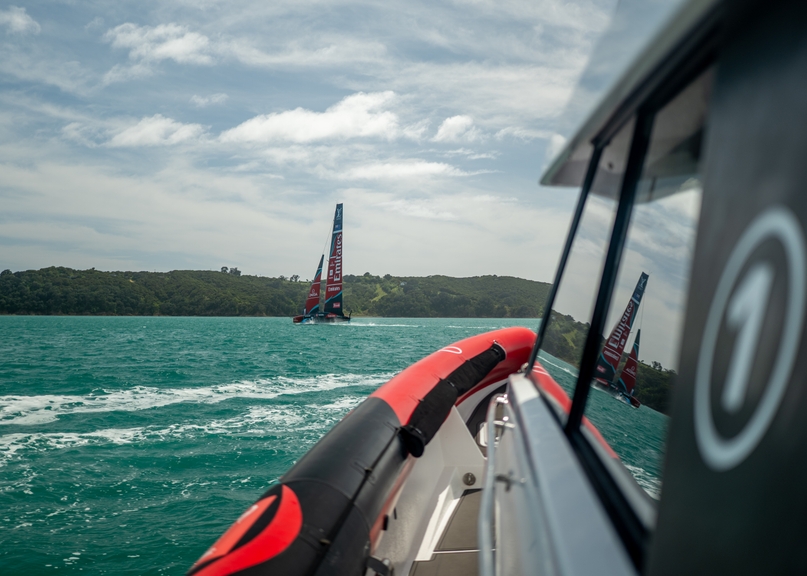
As preparations continue for the Louis Vuitton 38th America's Cup in Naples 2027, Emirates Team New Zealand's sailing team is spending long hours on the Waitematā Harbour, training, testing and refining their performance aboard Taihoro. Supporting them is a coaching and performance team working closely alongside the sailors, analysing every session and helping turn observations, data and experience into efficiency and meaningful improvements.
Coaching an America's Cup sailing team comes with a particular challenge: the athletes themselves are often the people with the deepest understanding of how the boat behaves. With the AC75s reaching speeds of up to 55 knots, the equipment and technology may have evolved considerably, but the fundamentals of yacht racing remain: reading the wind, finding the shifts, making the right decisions and getting the boat around the racecourse as cleanly and quickly as possible.
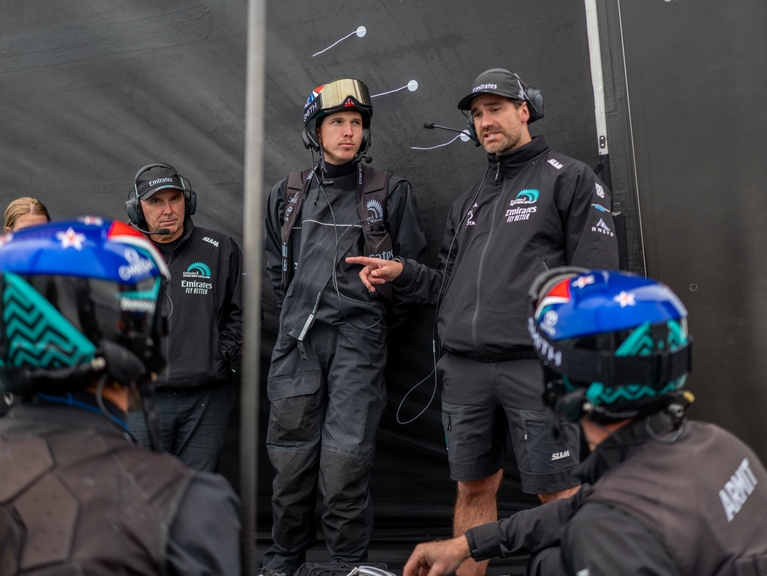
For Sam Meech, who joined Emirates Team New Zealand after competing as an Olympic Laser sailor winning a bronze medal for New Zealand in the Rio Olympics in 2016 and being part of the sailing team during the Louis Vuitton 37th America's Cup, the transition from athlete to coach has been a natural progression. "The sailors are generally the ones with the most experience," Sam explains. "So really as the coach, you're just trying to facilitate the sessions and get the best out of the sailors."
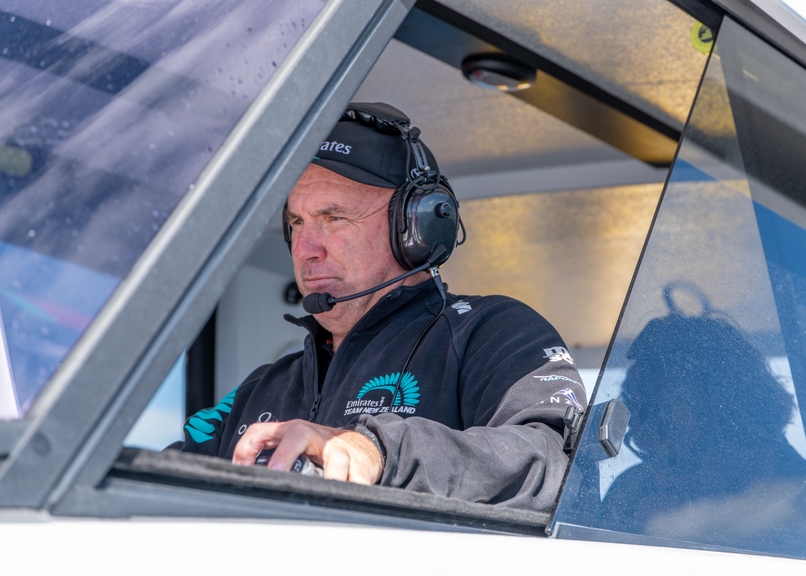
Ray Davies brings extensive experience to this process. Now in his eighth America's Cup campaign, Ray has competed as a sailor at the top level of the sport across numerous classes of boats, including winning the Volvo Ocean Race in 2001/02. Perhaps best known as a tactician and strategist on and off the water, a perfect foundation to take on coaching responsibilities, giving him an understanding of all perspectives.
"My philosophy behind the coaching is to simply present the facts," he says. "The sailors know when they can do things better or when they've made a mistake. They don't really need to be told." Instead, the focus is on making sure the team has access to high-quality video footage, data and analysis, creating an efficient environment in which sailors can review what happened on the water and work out how to improve.
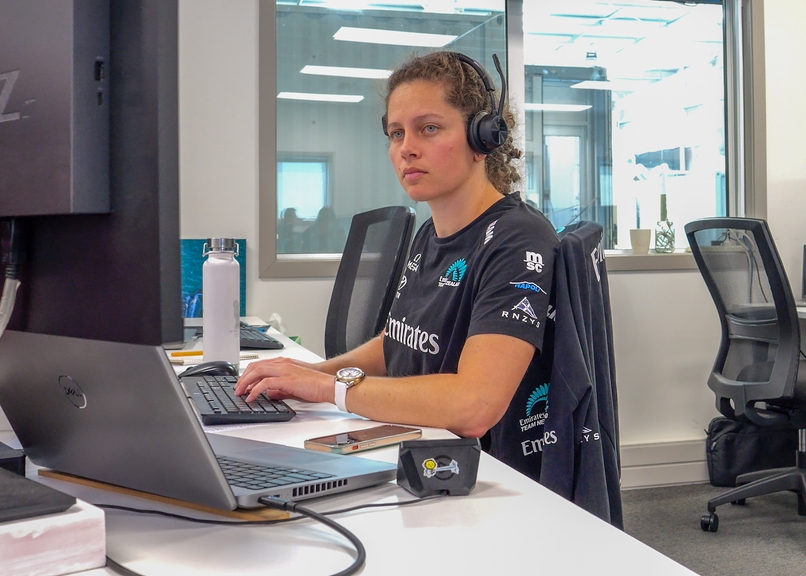
Collecting relevant data is important and the challenge lies in interpreting it, identifying what matters and communicating those findings to the sailors in a way they can use. As a Performance Engineer, Elise Beavis, who joined Emirates Team New Zealand as an intern ahead of the 35th America’s Cup, has carved a critical role working across the technical sailing and performance aspects of the programme. An accomplished sailor herself, Elise has previously won the Women's World Championship in the Waszp class, and brings first-hand understanding of high-performance foiling to her role within the team.
Her work involves analysing the fundamentals of how the boat is performing and presenting the findings to the sailing team as a whole. With training sessions often moving at a fast pace, feedback needs to be delivered quickly enough for the sailors to apply it while the session is still underway.
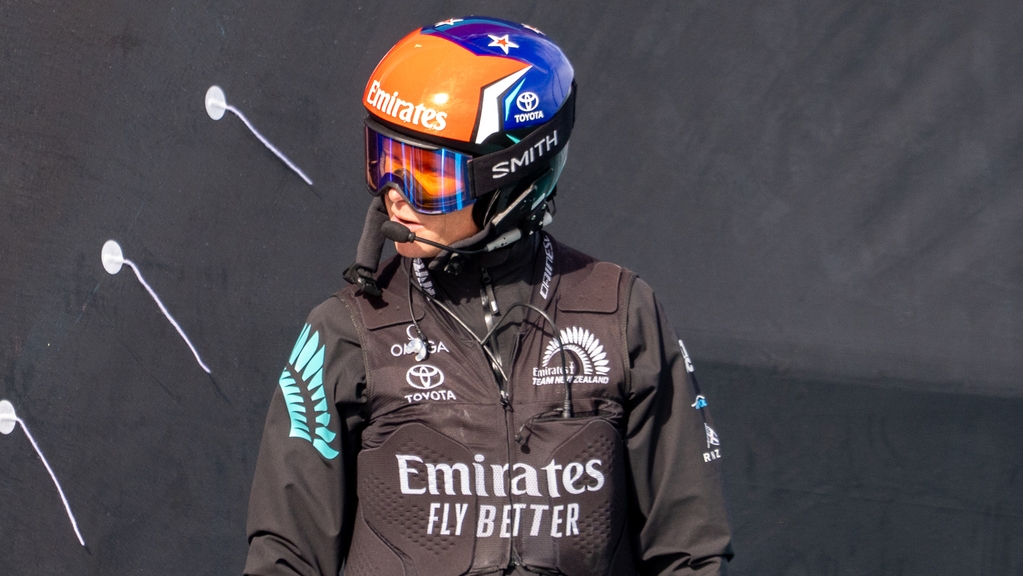
Chris Draper brings another valuable perspective to this process. Having been involved in three America's Cup campaigns, as well as an Olympic bronze medal in the 49er, Chris combines his experience sailing Taihoro with his coaching background during the Louis Vuitton 37th America's Cup.
His familiarity with the AC75 allows him to interpret the technical information in the context of how the boat actually feels to sail. This exchange of information is particularly important when translating the sailors' experiences into insights that can also be communicated to the design team. In a sport where decisions happen in fractions of a second, knowing what to communicate, and when, can be just as important as the information itself.
Technology also plays an important role in preparing the sailing team. Emirates Team New Zealand's simulator has evolved significantly over successive campaigns, becoming an increasingly realistic environment in which sailors can practise challenging situations. By recreating specific scenarios and manoeuvres, the simulator allows the team to develop familiarity with the boats and explore different techniques in a controlled setting.
The importance of this approach is shared across other elite sporting environments. Before flying out to Europe for their Northern Tour, Emirates Team New Zealand welcomed members of the All Blacks, including Damian McKenzie, Wallace Sititi, Anton Segner and Gilbert Enoka, to the team's base. The All Black group had the opportunity to experience the sailing simulator and gain an insight into the complex demands of sailing an AC75.
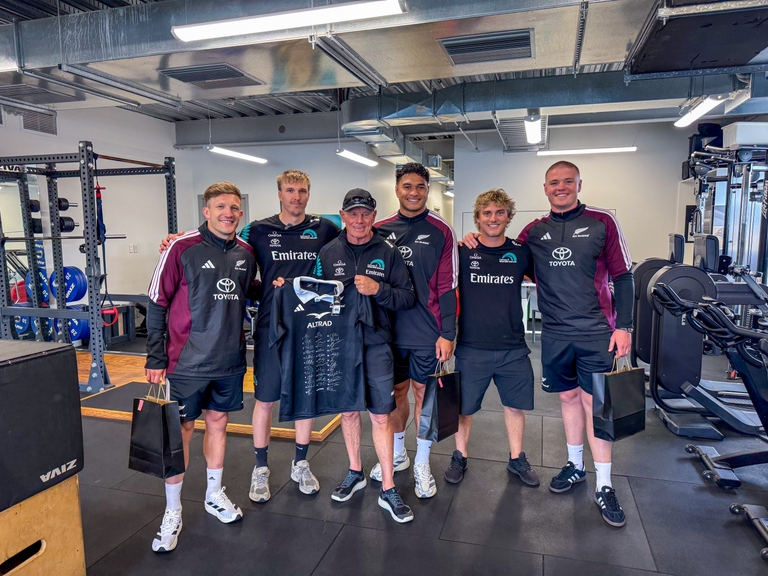
For Ray, the visit highlighted the similarities between two high-performance sporting environments. Both teams operate at the highest level, constantly looking for ways to improve, adapting their approach and striving for excellence. Just as importantly, both recognise the value of professionalism, teamwork, data, technology and maintaining a strong human connection within the group. Despite the different demands of rugby and sailing, the underlying principles of preparation, communication and continuous improvement are remarkably similar.
Ultimately, performance will be decided on the pitch or, for Emirates Team New Zealand, on the racecourse in Naples. Reading the wind, identifying shifts, making split-second decisions, controlling the other team and executing a strong start will all play a crucial role. At speeds over 50+ knots, close-quarters match racing leaves very little room for error.
As Ray puts it, "You don't have to win by heaps, but you just have to win."
And when the margins are this small, the ability to communicate, understand and make the right decision can make all the difference.
WATCH THE LATEST EPISODE OF FINDING FAST HERE
RELATED ARTICLES
ALL THE SMALL THINGS: FINDING SPEED AND PERFORMANCE IN THE DETAILS /// AC75 TESTING RESUMES WITH NEW UPGRADES FOR TAIHORO /// NAPLES PRELIMINARY REGATTA LINE-UP /// 2027: THE LOUIS VUITTON 38TH AMERICA'S CUP